This piece was originally written for the Tender Stores newsletter. If you would like to sign up for our occasional mailing list please
On Trade Shows
Every six months, the fashion business is set up to deliver new things to customers (the people who actually buy clothes for themselves to wear), and as it takes some time to make those clothes, designers get together a collection about six months ahead to show to potential stockists, journalists, and the wider industry, and to take orders for production. Paris men’s week was last week, and I gave it a go for the first time. There’s excellent writing out there from the perspective of visitors, but I thought it might be interesting to write about trade shows from the perspective of an exhibitor (like a very very much lower key version of Paul McCartney’s photos of photographers).
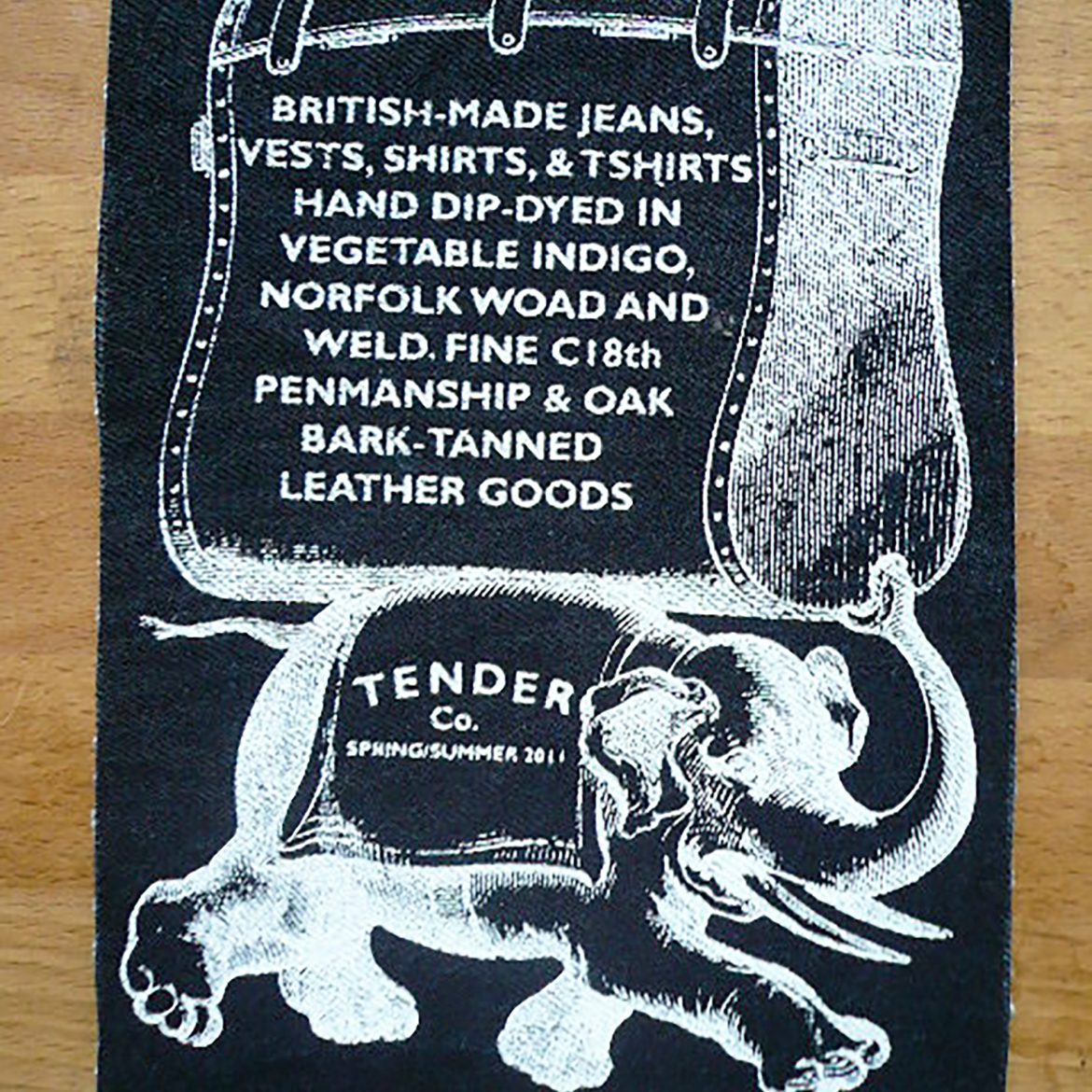
Way back in 2010 when I first had results to show of the months of work I’d put into getting Tender together, I made a list of shops that I admired, and posted them an invitation, which I printed myself onto woad dyed denim, in the print rooms at Central St Martins, who generously let me come in and do a screen. I did something like this every season for years. At first I patched together ways to get samples to shops in a combination of visiting them myself with a suitcase, inviting buyers to my home in London (which involved replacing the kitchen table with a garment rail and not cooking anything until after everyone had visited), and in some cases sending a box of clothes to shops on trust that I’d get them back.
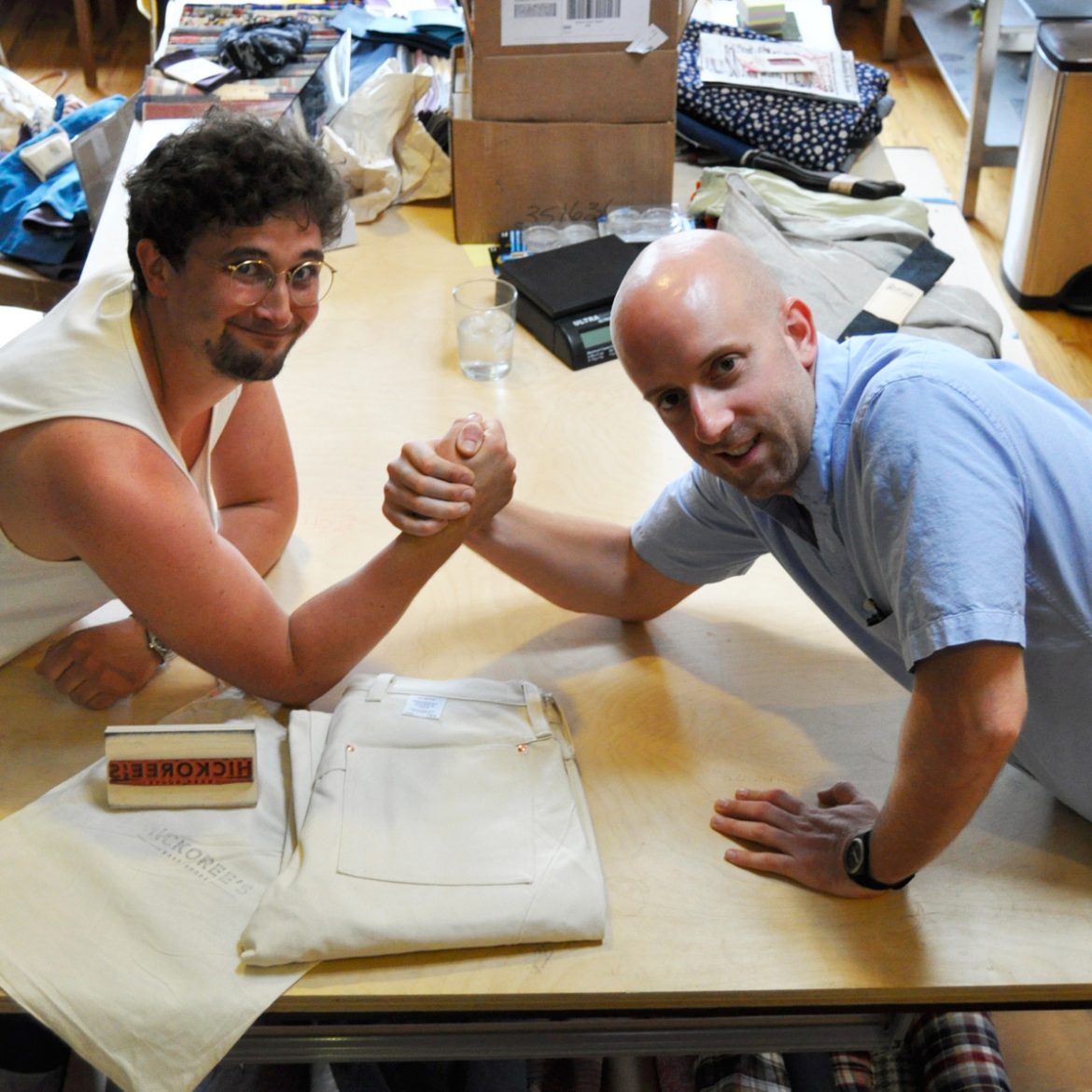
I was also very kindly introduced by a mutual friend to the Corsillo brothers in Brooklyn, who had the necktie and bandana brand The Hill-Side, and were in the process of starting their own shop, Hickoree’s. Emil and Sandy allowed me to show Tender from their space in Williamsburg and introduced me to their friends and customers, some of whom are Tender stockists to this day. I’m immensely grateful to them both. This was a sort of embryonic trade show, as there were fun and interesting people coming by, and there was always good Hickoree’s stock to look at.
Around the same time I started visiting Tokyo twice a year, for a very slightly more formal showroom with my still-friend-and-partner Akira. He now has his own showroom year round, but at this time he was working from a small atelier high up in a residential building, and would rent out gallery space around Shibuya each season. Akira’s great talent is introducing and contextualising products from around the world for Japanese retailers. In combination with the Corsillo’s lessons in world-building, and my time working in tailors shops in London, Akira has taught me pretty much all I know about presenting Tender to customers.
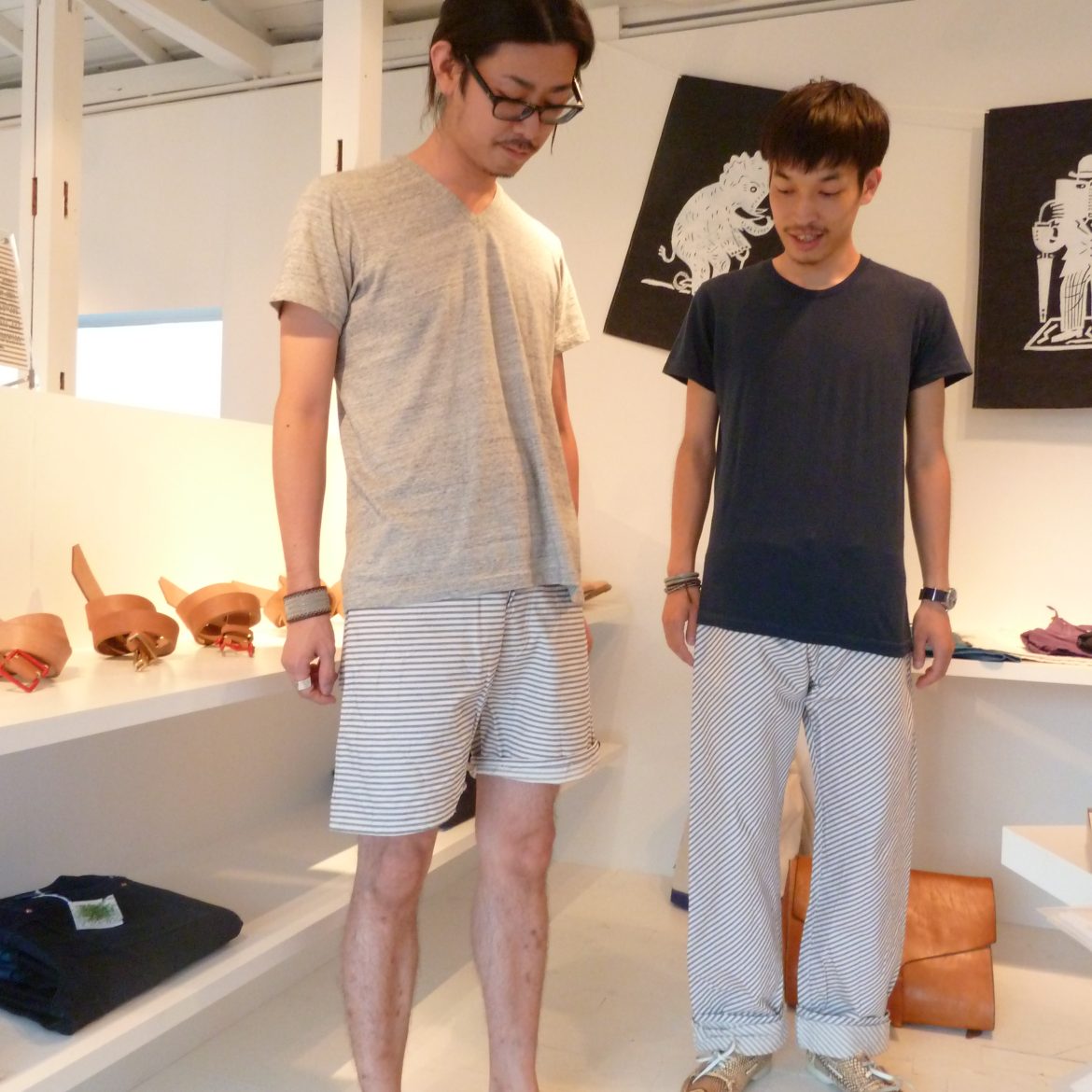
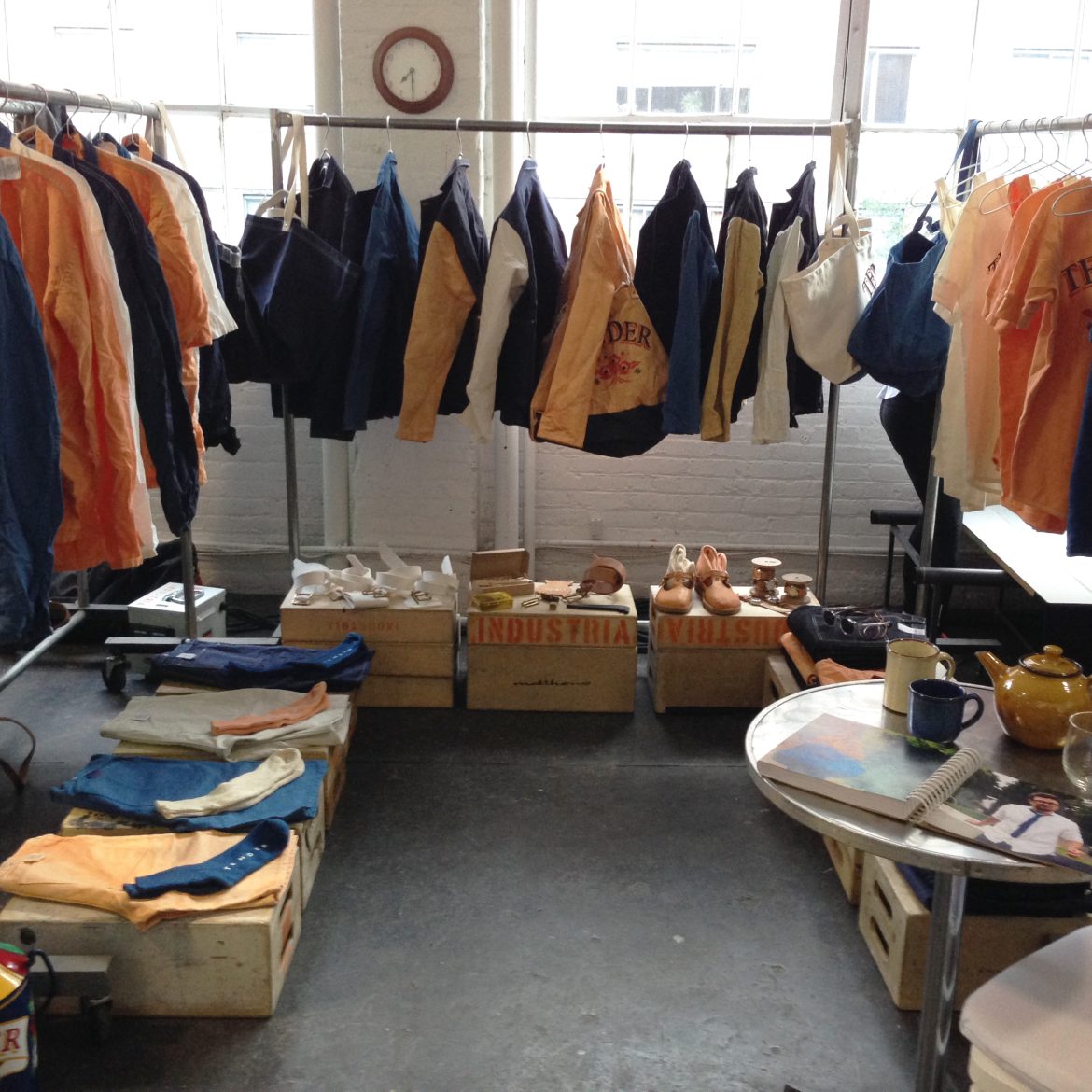
For a long time I’ve been of the opinion that I don’t want to sell Tender, I want people to buy it. By this I mean that it should never be a push from me that makes someone choose to take on a Tender product, or start a relationship as a stockist. Rather I’d much prefer it if people come to my things in their own way, and on their own terms (as an aside, this is the design principle behind the Tender Stores website: but that’s for another newsletter, perhaps). Akira’s showroom is the only example I know of the Japanese wholesale process, but he excels at this I think- not every brand he shows will be relevant to the businesses of all his customers, and he’s not snobby about different types of shops or the backgrounds of his products, but everything and everyone that he puts together have unusual perspectives and are good at what they do.
After a few seasons visiting Hickoree’s in Brooklyn, European stockists in person, and Akira’s showrooms in Tokyo, someone suggested I should try a proper trade show in New York. As with many things I pretty much just did what I was told, and ended up with a rail and a couple of folding chairs in a huge photo studio at the show that was then called Rendezvous but would later become MAN. Every January and July I would ship a box of samples ahead of time, then arrive the day before to set up. The space was divided up across two big rooms, with exhibitors ranging from established brands with dedicated sales staff to one-person operations like Tender. The organisers would generate a certain amount of buzz for the show, and put together a good set of designers and brands. Even at its best, though, a show like this will always feel a bit like a battle for attention, which doesn’t really show Tender in its most interesting light, I don’t think.
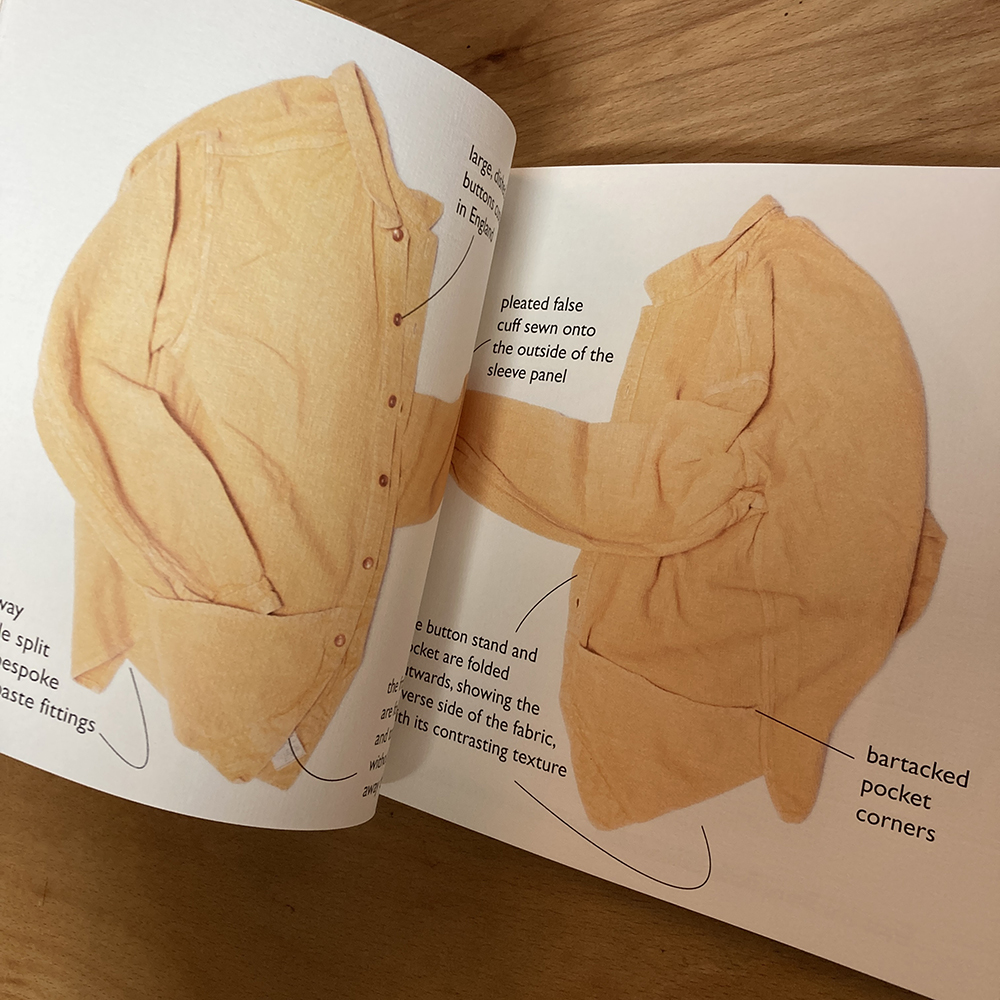
It was a very interesting experience, and doing these weeks definitely helped grow Tender as a business, which has allowed it to keep going as long as it has so far, however in 2016, for family reasons, I decided to take a season out of travelling. I put my air fare, show space, and hotel budget towards producing a really nice bound paper line book and sending copies out, with fabric cuttings, to all the stockists that I would have otherwise invited to an exhibition. The idea was that shops would be able to look through everything in their own time, in the own environment, feel the fabrics and make their order with the information in front of them. It worked pretty well from a business perspective, and it allowed me to retreat under my rock and not know too much about what the wider fashion world was doing, so I did a new book every six months, and a season away from travelling became nearly a decade.
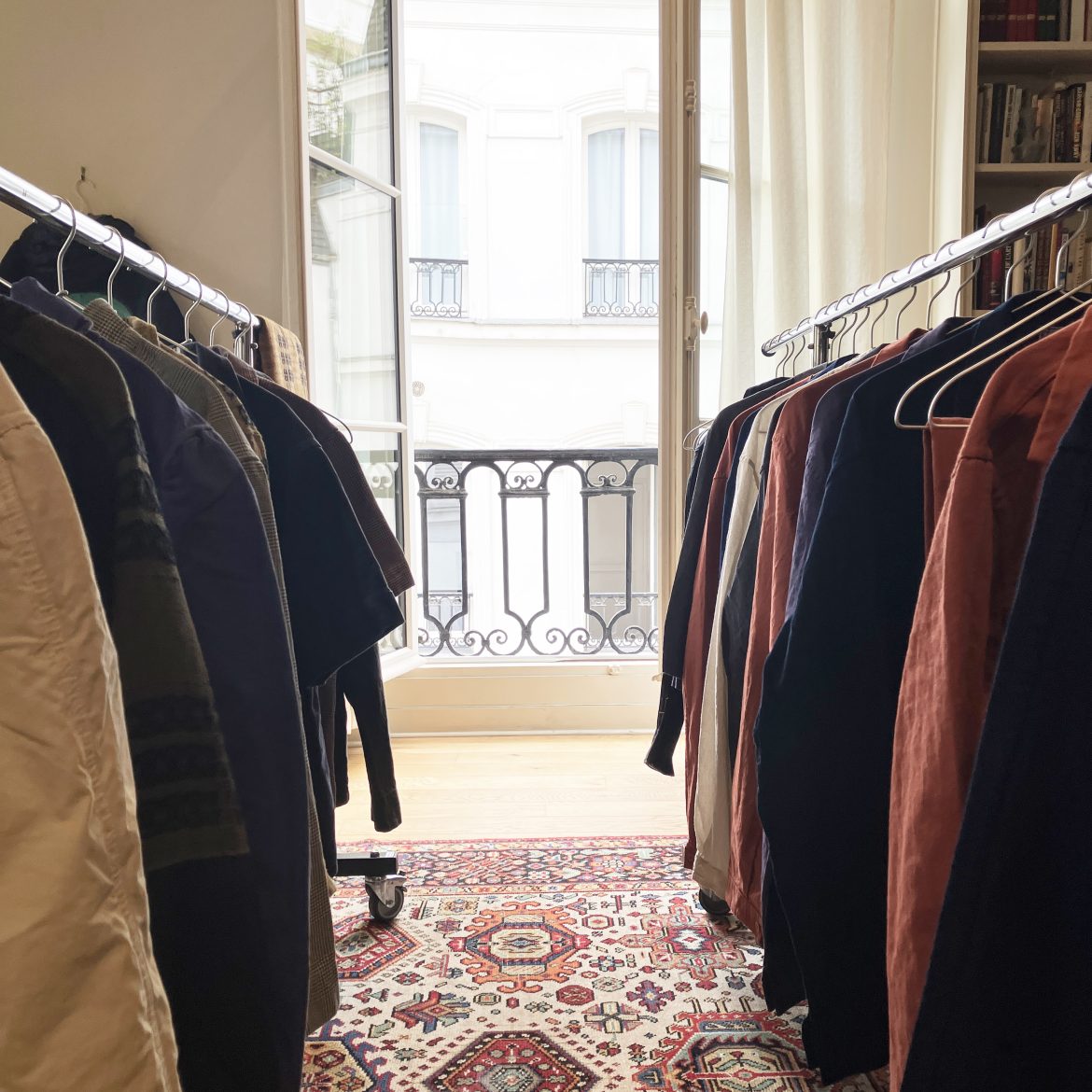
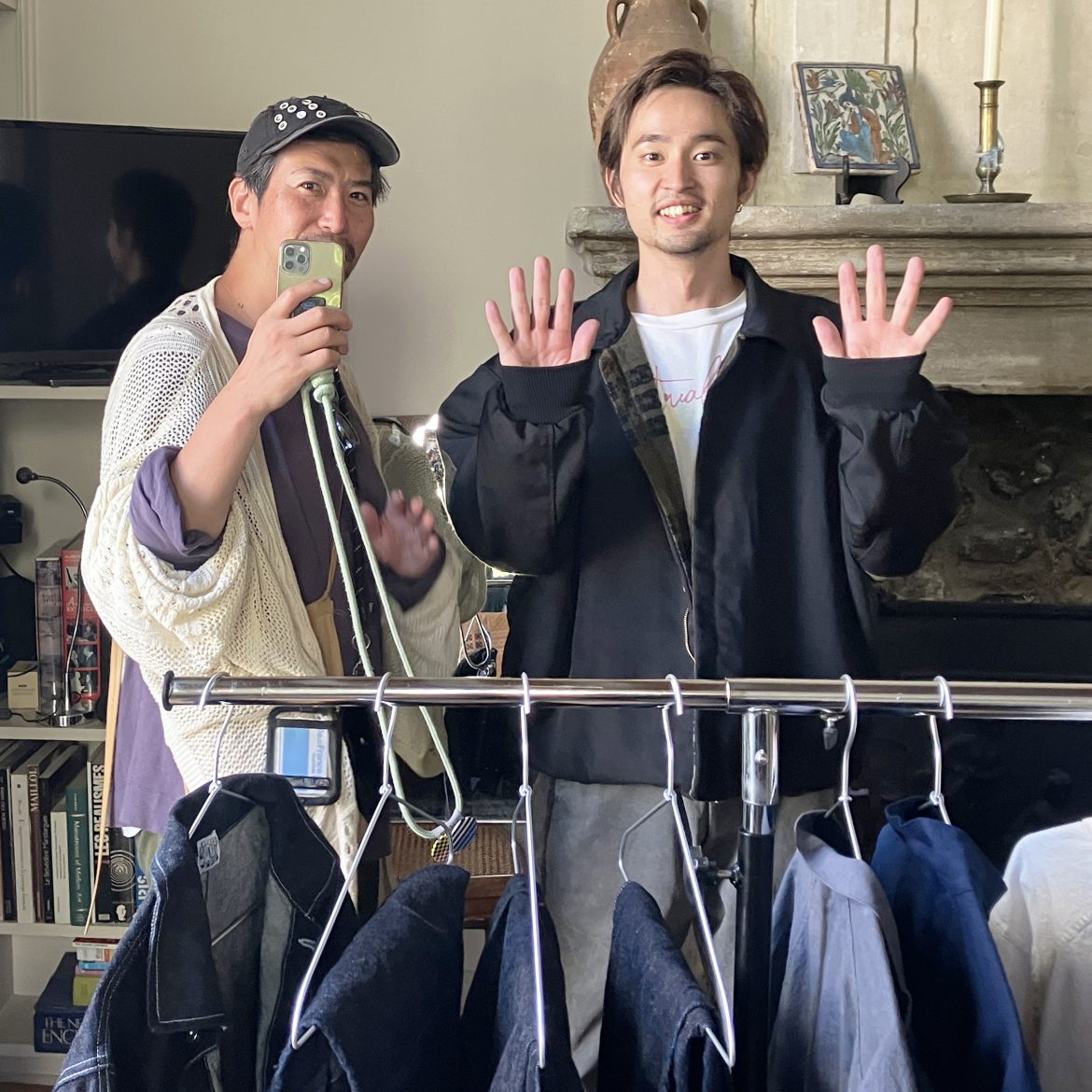
The catalyst for doing another show, really, was the new brand Working, which I’m doing with my friend Robert Newman. He has his own label, Middle Distance, so between us we have three full collections, which is enough to make our own showroom and bring in a range of different people. This was a first try for us doing this, and we weren’t really sure how it would work out, but the response was fantastic! What we were going for was the convenience of a commercial showroom but the personalness of doing something at home, at a slower pace. So we made our exhibition in a private apartment, only invited people one at a time, with plenty of time between appointments, and were both there in person to provide as much or as little information as people wanted. Buyers can try things on, take their own photographs, and get a feeling of context from our other projects.
One unforeseen bonus, for me, was using this pre-production period as a sort of actor’s workshop. Without the adrenaline rush of a full trade show, Rob and I were able to really spend time together with the Working samples and start to think about where we’ll take the project next. Likewise by seeing Tender in a new space, and through the eyes of retailers, I can work out how best to present the garments in a few months when they come through production and into stock.
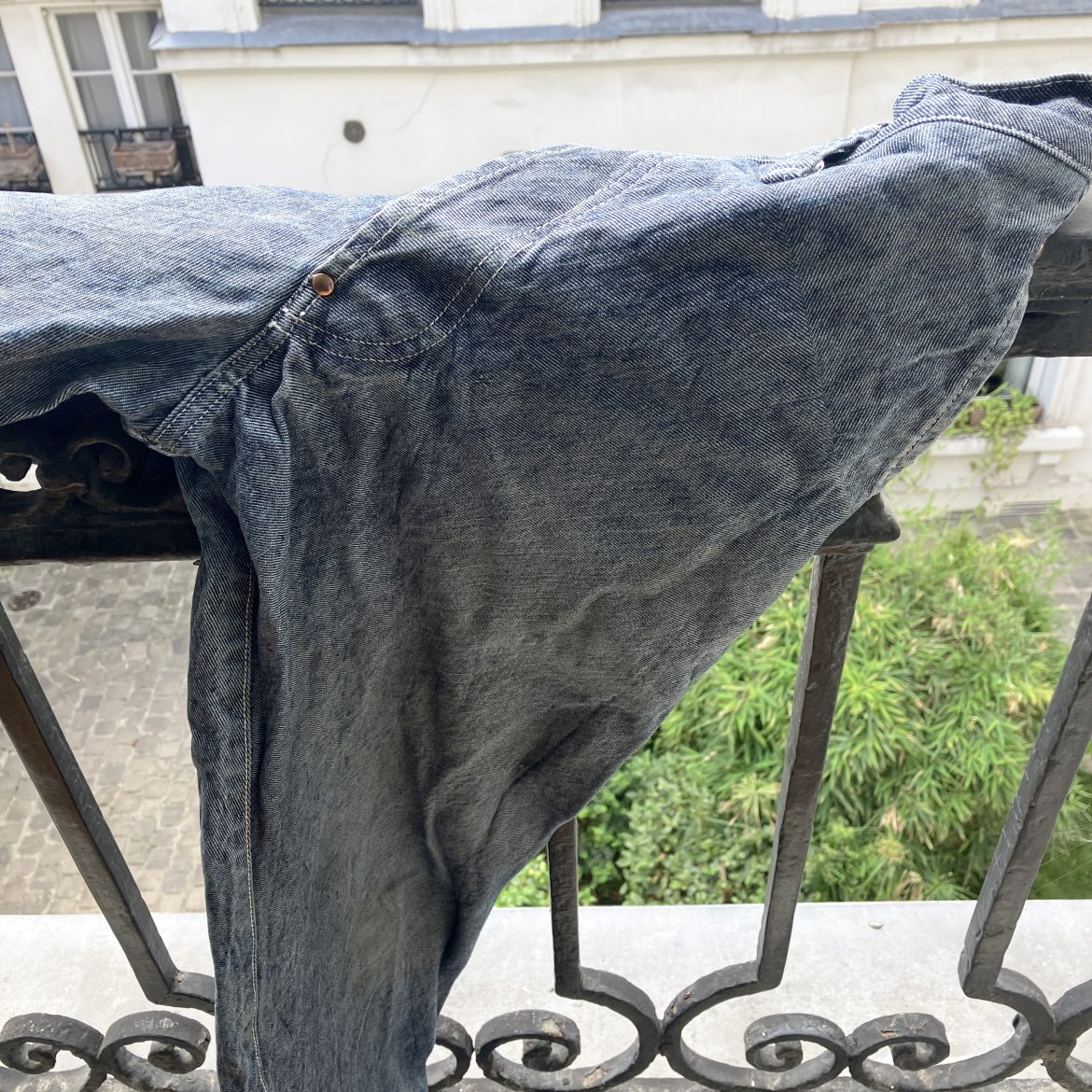
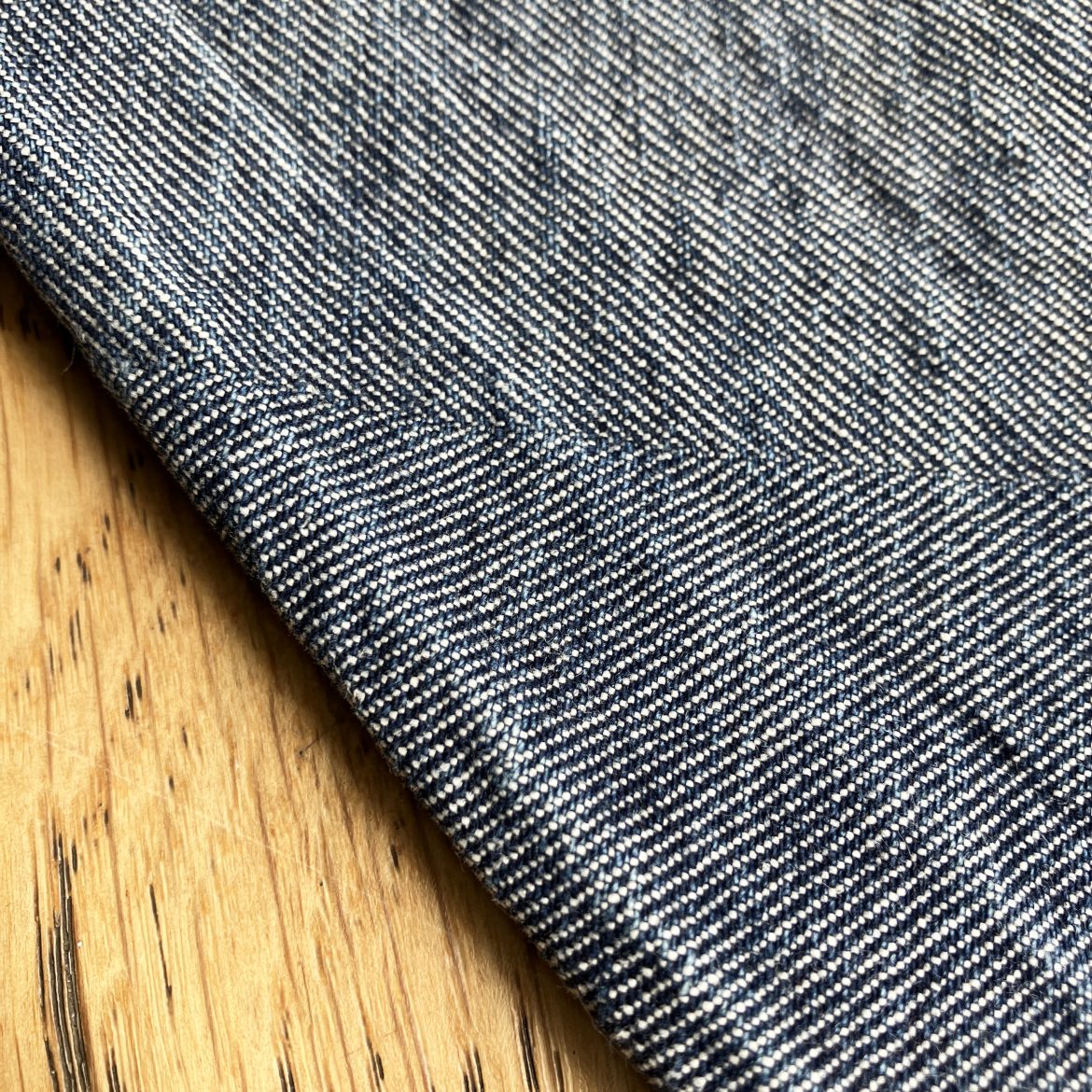
The best thing, for me, though, was seeing retailers in person- many for the first time. There are stockists who I’ve been working happily and closely with for years who I’ve never met in real life- it was a little intimidating but a real treat. And of all of this the loveliest was seeing Tender products that people had worn for years. A long-term customer who works elsewhere in the fashion industry brought his own pair of 133 Weaver’s Blanket Denim trews in. This is one of my favourite fabrics, but I’d never seen it worn in quite so beautifully. To have someone bring their jeans all the way to Paris to show me, years after buying them, was so generous and a real highlight of the week.
So, rather like Stephen Fry’s comment looking back on decades of celibacy (“it seems insane now that I think about it”), I’ve really enjoyed reengaging with an industry which has a lot of lovely people in it. Showing Tender Spring/Summer 2026 in Paris has reenergised me for the production and retail of the upcoming Autumn/Winter 2025 clothes, and been a reminder of all the interesting things that happen on all sides of the fashion world.
This piece was originally written for the Tender Stores newsletter. If you would like to sign up for our occasional mailing list please
On Jeans

On Sense of Place
On Teaching
On Collaborating

On Shopkeeping

On Butterflies
On Spring / Summer 2024

On Pleats and Darts

On Colours

On Knitting with Two Yarns

On Autumn/Winter 2023

On Coffee Mugs and Understandable Construction

On Lost Jeans

On Construction-First Design

On Shirt Tails and Coat Tails

On Woven Stripes
